How Apparo and Cox Enterprises Cybersecurity Cohort helps nonprofits build stronger, more secure technology foundations
Why cybersecurity support matters for nonprofits
For many nonprofits, technology is essential to delivering impact, yet cybersecurity often falls to the bottom of a long to-do list. Limited staff capacity and competing priorities can make it hard to know where to start. Lacey Facer, Chief Operating Officer of Women in Technology (Marrietta, GA), shared how Apparo’s approach in the Cox Enterprises-sponsored Cybersecurity Cohort for nonprofits met her organization where it was and delivered practical value quickly. She explained that as a small-staff nonprofit, she was responsible for operations well beyond IT and realized their cybersecurity “was still a work in progress,” making the cohort an especially timely opportunity.
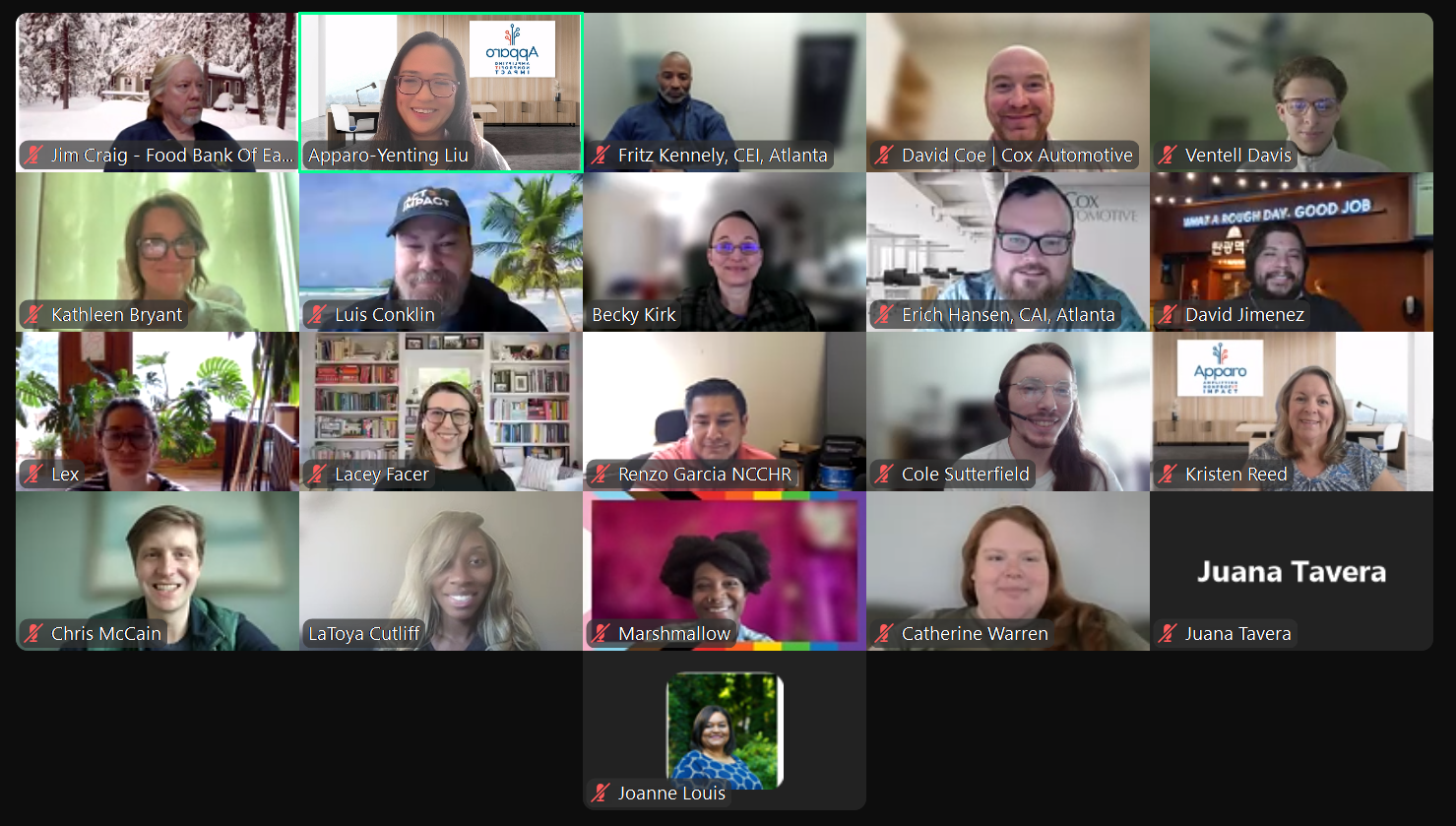
Lacey Participates in the Cybersecurity Cohort in April 2026
Hands-on guidance, not just information
The cohort pairs nonprofits with dedicated mentors and a structured, well-organized program. Lacey described her mentor as “fantastic” and emphasized that he helped with real-world issues beyond the formal curriculum, including troubleshooting a website problem that disrupted access for corporate partners. She noted that Apparo “had it very organized” and provided “plenty of time for us to work with our mentors,” which made the experience both manageable and impactful.
Turning assessment into action
A core strength of Apparo’s work is translating complex technology topics into clear next steps. Through the cohort’s cybersecurity assessment, Lacey gained a concrete picture of her organization’s risks and priorities. She shared that the assessment was “something that I was able to share with my Board,” including a technology subcommittee, which helped move conversations from awareness to action. With Apparo’s guidance, the organization began creating plans, policies, and procedures so that when issues arise, there is a defined process in place. This focus on practicality ensures nonprofits can continue building capacity long after the cohort ends.
Building trust with donors and partners
Cybersecurity is not only an IT concern, it is a mission issue. Lacey reflected on learning that nonprofits are among the top targets for cyberattacks, often because of the sensitive donor data they hold. She explained that secure systems help donors feel confident that their information is protected, noting that “our donors are going to feel very comfortable with donating to us” when security is a priority.
The power of community and personalized support
Another hallmark of Apparo’s approach is the cohort model itself. Lacey compared the experience to other resources she had tried and said the small-group format was more beneficial. Being able to talk with a real person, hear what peers were experiencing, and learn how others addressed similar challenges created a sense of shared progress. She summarized the value clearly, explaining that it was “much more beneficial than a self-led program,” especially for leaders juggling multiple responsibilities.
A clear return on time and effort
When asked what she would say to another nonprofit leader considering Apparo, Lacey did not hesitate. She described the cohort as “a win-win” that was worth the time for both peace of mind and organizational resilience. The program helped confirm they were on the right path or, just as importantly, showed them how to get there. With the added benefit of a mini-grant provided by Cox Enterprises, her organization could immediately begin implementing needed updates. Her conclusion captured the essence of Apparo’s impact: she said she would “highly recommend” this program to other nonprofit leaders and she plans to participate in future cohorts as well.