Accenture supported 2024 Mission Possible Award recipients in identifying a software application to enhance their ability to protect children and empower parents
Sponsored by Accenture
Background Information
The Lantern Project is dedicated to eradicating human trafficking, enslavement, and exploitation by fostering community empowerment through education and identification. According to the organization, human trafficking and exploitation – including sex trafficking, forced labor, and debt bondage – is the fastest-growing criminal activity worldwide. The Lantern Project is on a mission to protect children and empower parents as men, women, and children are subjected to trafficking and exploitation for sex work, pornography, forced domestic and agricultural labor, organ harvesting, surrogacy, ova harvesting, and debt slavery.
As the recipient of Apparo’s 2024 Mission Possible Award, The Lantern Project partnered with an Accenture skilled volunteer team to assess the management of their organization’s education and training, identify and document business requirements for a learning management system, schedule and attend vendor demos and evaluating potential solutions.
The Lantern Project Nonprofit Team: Simon Arkley
Accenture Skilled Volunteer Team: Simon Pfister, Marcel Verolme, Deondre Grey
Sponsor: Accenture
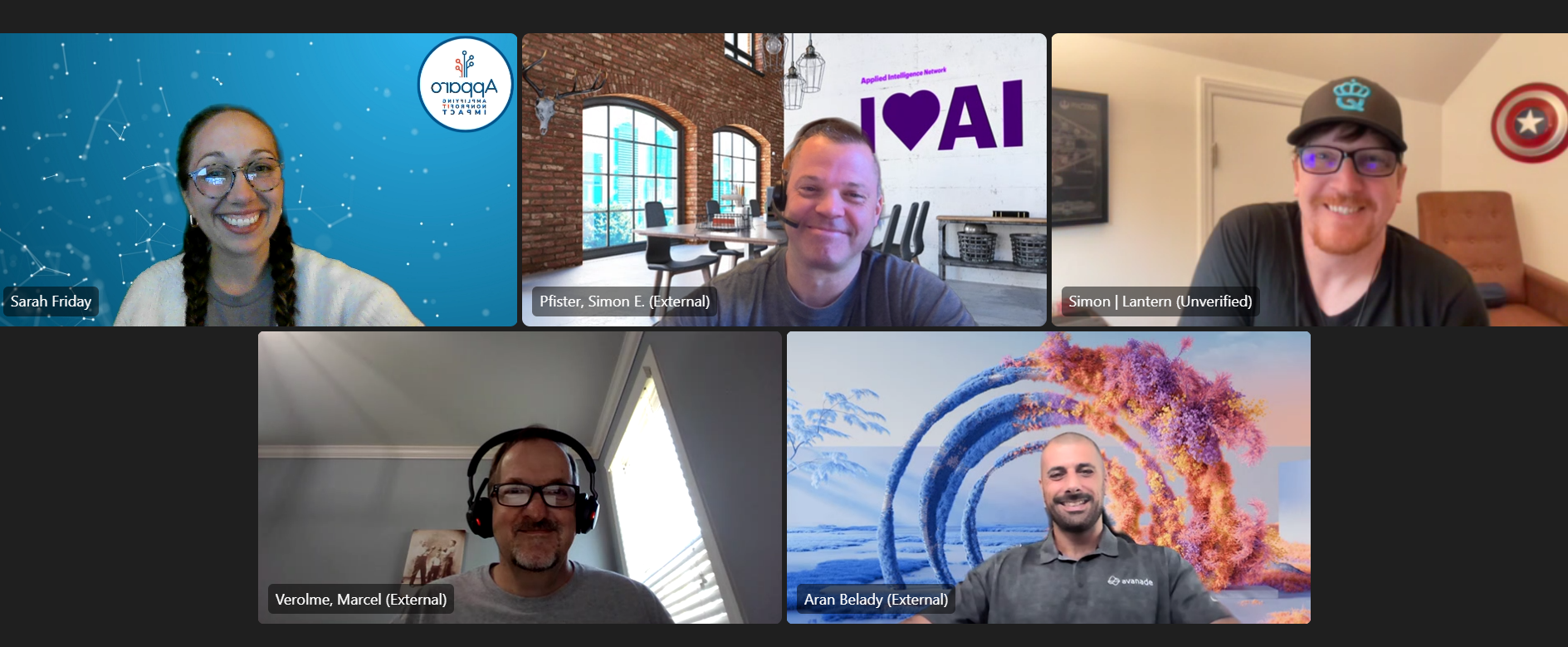
“Seeing The Lantern Project win the Mission Possible award was great but seeing the award turn into a solution to help educate the public on preventing human trafficking was even better,” Marcel Verolme of Accenture said.
The Lantern Project’s awareness and education initiatives are primarily conducted in-person, however their content is not customizable for different audience segments which include families, businesses, and churches. Additionally, they face challenges in tracking their content and obtaining user feedback. To address these challenges, the nonprofit proposed adopting a Learning Management System (LMS). As Sarah Friday explained, “They wanted to identify a learning management system to help them deliver and optimize online training.”
Accenture volunteer, Simon Pfister, led the project and the team began by understanding the current state, defining requirements, and doing marketplace research and selection. Through this the volunteers narrowed options to Bridge LMS and Talent LMS, and they ultimately recommended Talent LMS after hands-on-testing with the nonprofit.
With the implementation of TalentLMS, The Lantern Project anticipates saving significant time to be used on more mission critical work.
Anticipated Impact includes:
- Reduce Training Prep and Delivery Time: Simon Arkley expects to reduce time spent on training prep, travel, and delivery by 50%, allowing him to focus on mission-critical work like expansion efforts.
- Increase Revenue and Decrease Expenses: By monetizing training and reducing travel costs.
- Mitigate Risks: Will reduce keyman risk. Improves data accuracy and compliance.
- Improve Data and Compliance: Better tracking of learner progress and participation.
One major area of impact is the ability for the nonprofit to expand.
Online training will enable The Lantern Project to reach more individuals across new geographic areas. Simon Arkley shared, “We had some people reach out to us in Western North Carolina, in the Asheville area, asking about starting a hub there. Also, a law firm reached out to us about helping at a hub in Texas. There’s a huge amount of potential and this will make it easier for the nonprofit to expand and further our mission of combating human trafficking and sexual exploitation.”
The Lantern Project is also integrating new technologies such as AI to further their reach
Implementation is underway, with the team set to start filming training modules prioritized for school-age children and compliance with state requirements. Simon Arkley described the innovative integration: “We’re weaving it in with our AI models so they can call our AI, chat with our AI about anything. That’s a great way to engage the kids.”
Volunteers reflected on their experience during the project.
The volunteers’ pride and excitement shone through:
Deondre Grey of Accenture shared, “With this being my first time experiencing the Mission Possible work outside of the application phase, it was refreshing to continue working with the winning nonprofit and truly something I looked forward to each week.”
“Another year of Mission Possible completed, another set of rewarding experiences. From the very first Art of the Possible sessions, through the regular meetings, and coming down to the finalists and presentations it’s been rewarding. It always is. Thank you for letting me be a part of it, Apparo,” Simon Pfister said.
In conclusion, Sarah Friday, Apparo’s Program and Volunteer manager shared, “It’s a lot of effort to get these projects to a successful and sustainable place for our nonprofit partners. We are just so, so, so, so, so grateful. I can’t say it enough to have you here and to be a part of this project.”
The Lantern Project’s journey is a testament to what’s possible when nonprofits, volunteers, and partners unite around a shared mission. With new technology and renewed energy, the future looks brighter. Learn more about Mission Possible here.